Zero-Downtime Multi-Carrier 5G Failover: An Operational Playbook


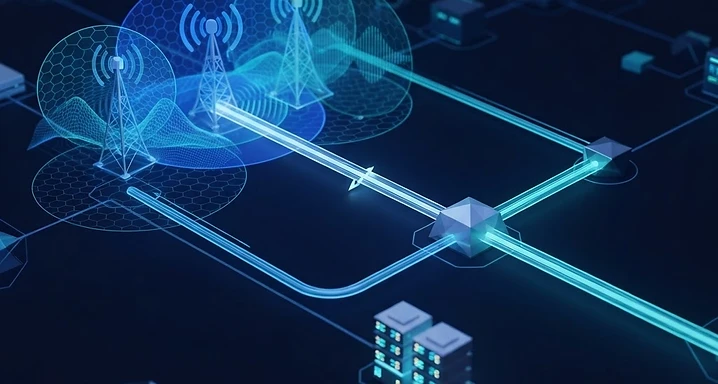
In enterprise network operations, an outage never happens at a convenient time. When a backhoe cuts a fiber backbone outside a distributed distribution hub or a primary ISP suffers routing table corruption during peak checkout hours, your secondary connection is either ready or you are burning operational revenue by the minute.
Too many distributed enterprises still treat cellular failover as a legacy 'hot-spare' that gets plugged in and forgotten. If you have spent late nights handling Sev-1 tickets in the NOC, you already know the ugly truth: link state is not application state. If your edge appliance does not validate true end-to-end transport across carrier boundaries, your failover will fail silently when you need it most.
To build resilient branch offices, remote construction field trailers, and mission-critical sites, engineering teams need a modern operational approach to carrier-aggregated 5G.
The Problem with Basic Link-Up Health Checks
A common issue we see in enterprise audits is relying on simple interface carrier detect. If a primary fiber terminal goes dark, interface link detection triggers immediately. But real-world outages are rarely that clean. High packet loss, DNS blackholing, brownouts, and upstream gateway stalls leave the Ethernet port green while data silently drops into a black hole.
If your branch router only looks at whether the link is physically up, critical traffic like retail POS transactions, ERP syncs, and telemetry streams stall out indefinitely.
To ensure true continuity, an enterprise-grade failover configuration requires active health checks:
- Multi-Target L7 Probing: Ping is not enough. Edge devices must cycle DNS lookups and HTTP handshakes against diverse public IPs (such as Tier-1 DNS resolvers) on tight intervals.
- Hysteresis Timers: Flapping connections can cripple a site. Configure aggressive drop-detection timers (e.g., three failed multi-target probes within 3 seconds) combined with conservative failback hold-down timers (e.g., minimum 5 to 10 minutes of rock-solid primary telemetry before traffic shifts back).
- Layer 7 Traffic Steering: Never allow non-essential background uploads—such as bulk video surveillance archiving or guest Wi-Fi—to choke out mission-critical traffic when operating on cellular data.
Learn how our engineering team configures these policies under the hood by visiting our breakdown of how GuardianLink architecture works.
Carrier Diversity: Moving Beyond Single-SIM Pitfalls
Having a single 5G SIM inside a backup cellular gateway does not mean you have redundancy. If an entire regional tower goes offline or encounters backhaul congestion during severe weather, a single-carrier cellular link drops right alongside your local landline.
Achieving true wireless resilience requires multi-carrier architectures:
- Virtual SIM (VSIM) and Multi-eSIM Orchestration: Instead of sending technicians on expensive truck rolls to swap out physical SIM cards, modern operations leverage automated multi-carrier profiles that dynamically negotiate active profiles depending on RF metrics.
- Carrier Aggregation and Bandwidth Bonding: For sites requiring sustained high throughput—such as connected job trailers running massive CAD files or distributed IoT edge gateways—bonding multiple distinct carrier links distributes packets across carriers simultaneously, eliminating single-operator coverage gaps.
- Sub-6 Mid-Band Tuning: Confirming carrier band support across both primary and secondary modems ensures that failover links do not drop down to congested legacy low-band frequencies, preserving predictable voice (VoIP) and transactional QoS.
Our hardware and carrier-blended data plans are engineered specifically to eliminate these bottlenecks. Explore our complete portfolio of high-availability enterprise connectivity solutions.
Securing the Cellular Edge: Compliance and Monitoring
When a site switches to cellular, security posture cannot slip. Many compliance standards, including SOC 2 and PCI-DSS, demand the exact same encryption, segmentation, and continuous monitoring controls over wireless WAN as they do across dedicated MPLS or private fiber links.
- Encrypted Tunnels: All failover links must automatically establish IPsec or WireGuard overlay tunnels before passing user payloads, preserving zero-trust posture across public cellular infrastructure.
- Out-of-Band (OOB) Telemetry: Maintain visibility into remote routers even when the primary network interface fails completely. Continuous telemetry tracking RSRP, RSRQ, and SINR signal values allows operations teams to spot RF degradation well before an outage occurs.
Modernize Your Failover Infrastructure
Network reliability is not something you leave to chance. By pairing robust multi-carrier hardware with proactive health-checking logic and automated traffic governance, you turn cellular into an active, enterprise-grade asset rather than an unpredictable contingency.
Ready to eliminate downtime across your remote locations and branch offices? Contact our network engineering team today to request a custom connectivity assessment and quote.
Editorial Disclosure: Articles on GuardianLink Networks are produced by our editorial team. Author names and images are illustrative personas representing our collective industry expertise.
Get connectivity insights
Join our newsletter for the latest on 5G failover, VSIM technology, and enterprise connectivity.
By subscribing, you agree to receive marketing emails from GuardianLink Networks. You can unsubscribe at any time.
Ready to upgrade your connectivity?
Tell us about your deployment — we'll match hardware and data plans to your needs.
Request a Quote